7 Warning Signs of Hidden Water Damage in Philadelphia Homes
Hidden water damage can silently destroy your home for months before you notice. Philadelphia's IICRC Certified restoration experts reveal the 7 telltale warning signs every homeowner should know.
Hidden Water Damage: The Silent Destroyer of Philadelphia Homes
Not all water damage announces itself with a burst pipe or a flooded basement. In many Philadelphia-area homes — particularly older row homes, twins, and split-levels common throughout Bucks and Montgomery counties — water infiltrates slowly and silently for weeks or months before visible signs appear. By the time damage becomes obvious, structural wood may be rotted, mold may have colonized wall cavities, and repair costs may have multiplied dramatically.
Here are the 7 most important warning signs our IICRC Certified technicians look for during inspections. If you spot any of these in your home, don't wait — contact Bulldog Cleaning & Restoration at (267) 982-5504 for a professional assessment.
Sign 1: Unexplained Water Stains or Discoloration
Yellow, brown, or rust-colored stains on ceilings, walls, or floors are among the most common — and most ignored — indicators of water infiltration. These stains form when water seeps through a surface, evaporates, and leaves mineral deposits behind. The stain's location tells a story: a ceiling stain directly beneath a bathroom often signals a slow plumbing leak or failing caulk; a stain along an exterior wall suggests roof or flashing failure or inadequate window sealing.
One important note: a dry stain doesn't mean the problem is resolved. Intermittent leaks (only occurring during heavy rain, for example) will dry between episodes, but the underlying source continues to allow water infiltration.
Sign 2: Musty or Earthy Odors
Mold produces microbial volatile organic compounds (MVOCs) that create a distinctive musty, earthy, or "old basement" smell. If you notice this odor in rooms that shouldn't smell that way — a second-floor bedroom, a finished basement, a closet on an exterior wall — it almost certainly indicates active mold growth hidden behind walls, under flooring, or inside ductwork.
Mold can begin growing within 24–48 hours of water exposure. Our mold remediation team uses professional air sampling and HEPA filtration to identify and eliminate mold colonies that aren't yet visible to the naked eye.
Sign 3: Warped, Buckled, or Soft Flooring
Hardwood, laminate, and engineered flooring will warp and buckle when exposed to moisture. Wood fibers absorb water and expand unevenly, causing boards to cup, bow, or develop gaps. Laminate flooring will swell and separate at seams. Tile may crack as the subfloor beneath it swells and moves.
Perhaps more concerning: soft spots in hardwood or vinyl plank flooring often indicate that the subfloor — and potentially the structural joists beneath it — have been saturated. When subfloor materials soften and crumble, repairs escalate significantly. Flood damage restoration often requires full subfloor replacement in severe cases.
Sign 4: Peeling, Bubbling, or Stained Paint and Wallpaper
Properly applied paint and wallpaper adheres firmly to a dry wall surface. When moisture infiltrates through the wall — from a leaking pipe inside the wall cavity, from condensation, or from exterior water intrusion — it disrupts the bond between the surface material and the wall. Paint peels at the edges; bubbles form as moisture trapped beneath the paint pushes upward; wallpaper lifts at seams and corners.
This is particularly common in Philadelphia's older housing stock, where original plaster walls may have microscopic cracks that admit moisture, and where aging plumbing behind lath-and-plaster walls can leak slowly for years before causing a visible failure.
Sign 5: Unexplained Spikes in Your Water Bill
If your water usage hasn't changed but your bill has increased noticeably — 15% or more — you likely have a hidden leak. Common culprits include slow leaks at pipe joints inside walls, running toilets (which can waste up to 200 gallons per day), failing supply lines behind appliances, and leaking outdoor hose bibs or irrigation systems.
How to Test for Hidden Leaks
Turn off all water-using appliances and fixtures. Locate your water meter and record the reading. Wait 30–60 minutes without using any water, then check the meter again. If it has moved, you have a leak somewhere in your system. Call a plumber to locate the source, and contact our water damage restoration team to assess any structural damage the leak may have caused.
Sign 6: Visible Mold Spots
Mold appears in a variety of colors — black, green, white, gray, or orange — and textures, from fuzzy colonies to flat discoloration. It thrives in dark, moist environments: inside crawl spaces, behind bathroom vanities, around HVAC equipment, under sinks, and in attic spaces near roof penetrations.
Critically: visible mold is almost always the tip of the iceberg. For every square foot of mold you can see, there is likely significantly more hidden in wall cavities, behind insulation, or under flooring. Professional mold remediation — not bleach — is required to properly address mold colonies. Learn more at our mold testing page.
Sign 7: Cracks in Foundation, Walls, or Ceilings
While minor hairline cracks in drywall are common in any home as it settles, horizontal or stair-step cracks in masonry walls, cracks wider than 1/4 inch, or cracks that have grown over time warrant immediate professional evaluation. These patterns often indicate hydrostatic pressure from water-saturated soil pushing against the foundation, or freeze-thaw cycles in water-saturated masonry — both of which can lead to structural failure if not addressed.
Basement wall cracks that allow water seepage during rainstorms are a clear indicator of foundation waterproofing failure and should be addressed before mold and structural wood deterioration compound the problem.
What to Do If You Spot These Signs
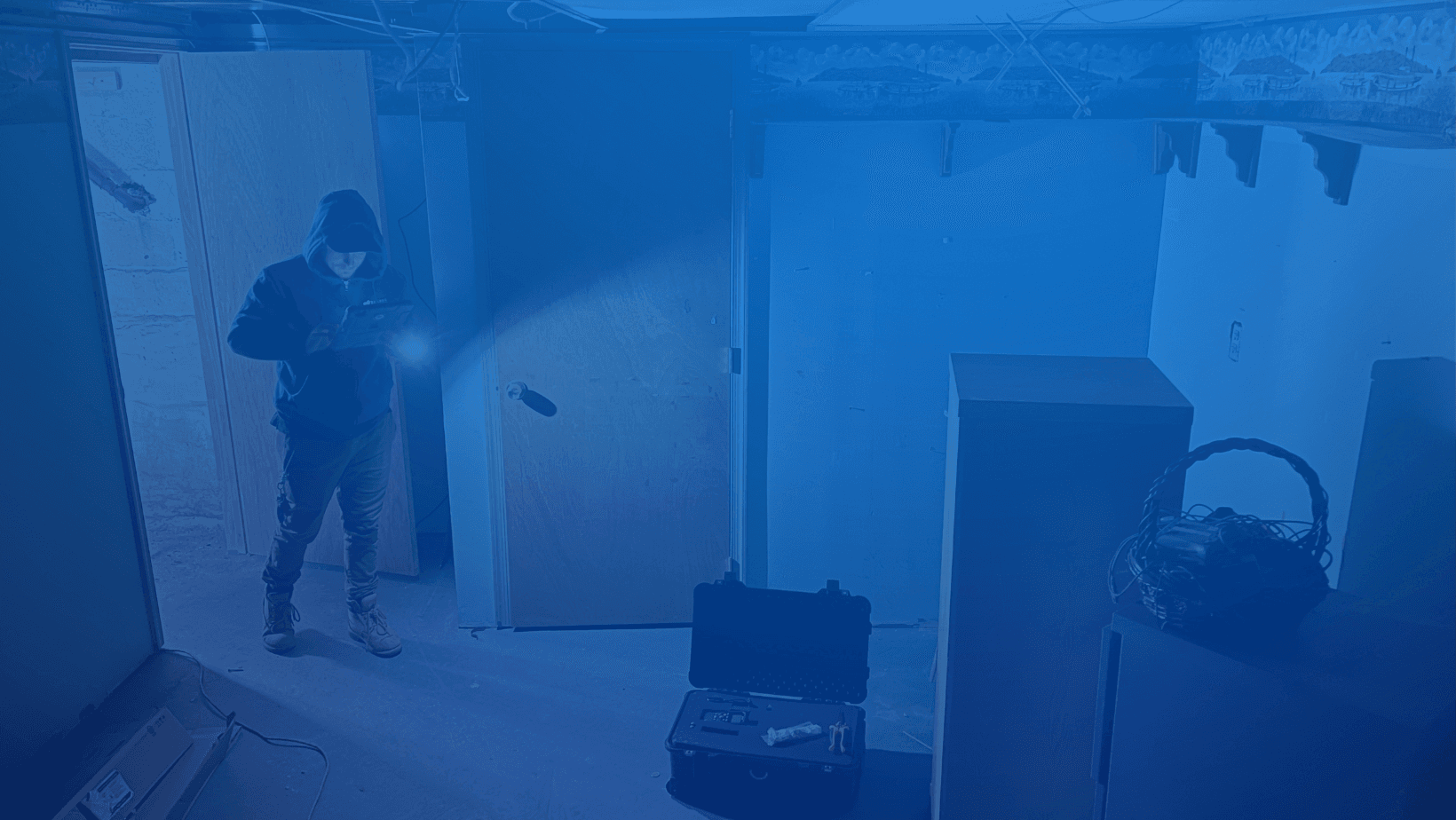
Don't wait for the problem to get worse. The longer water damage goes unaddressed, the more extensive — and expensive — the repair becomes. Our certified inspectors use thermal imaging cameras and calibrated moisture meters to detect water infiltration that is invisible to the naked eye, giving you a complete picture of your home's condition before a small leak becomes a major renovation.
Bulldog Cleaning & Restoration serves Greater Philadelphia and South Jersey — including Philadelphia, Bucks, Montgomery, Chester, and Delaware counties. Call us at (267) 982-5504 today for a professional assessment.